Integrative Oncology
Many people living with cancer use or are interested complementary therapies to better cope with symptoms, side effects of treatment, and the psychological burden of the disease. They often seek supportive approaches that address their individual needs and improve quality of life alongside conventional cancer care.
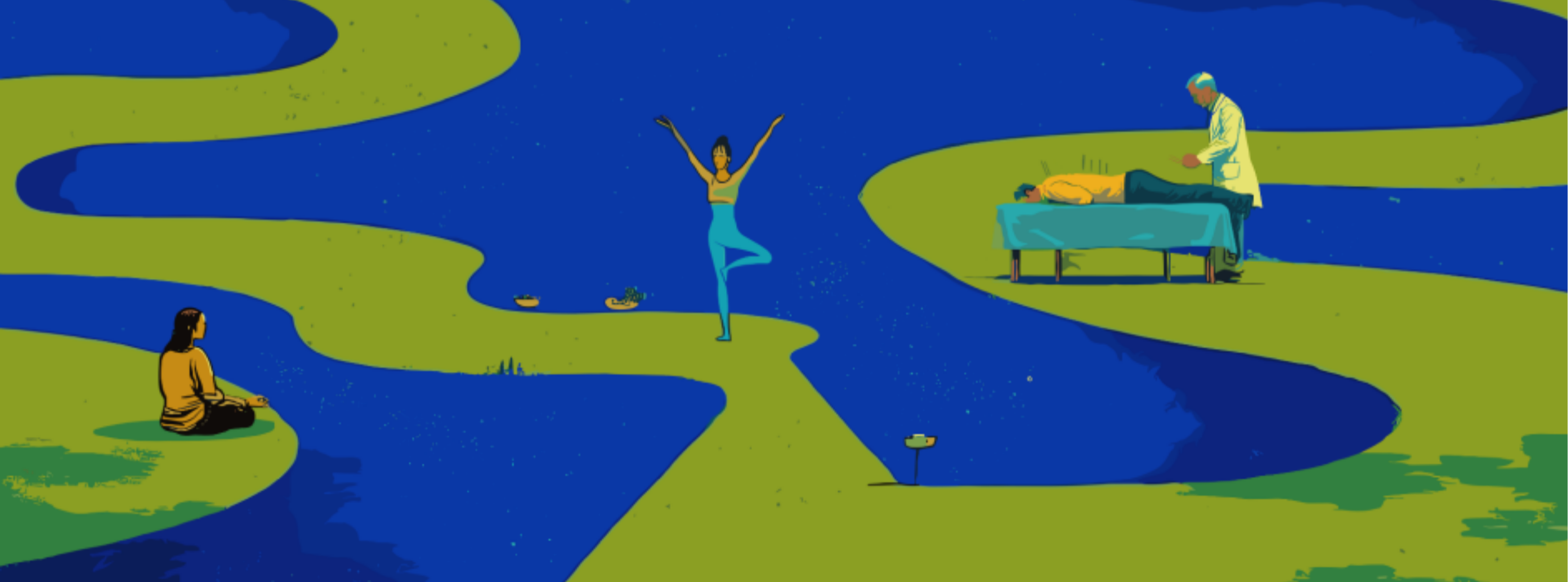
Integrative oncology is defined as a patient-centered, evidence-informed field of cancer care that utilizes mind and body practices, natural products, and/or lifestyle modifications from different traditions alongside conventional cancer treatments. Integrative oncology aims to optimize health, quality of life, and clinical outcomes across the cancer care continuum and to empower people to prevent cancer and become active participants before, during, and beyond cancer treatment. (Witt, C. M., Balneaves, L. G., Cardoso, M. J., Cohen, L., Greenlee, H., Johnstone, P., Kücük, Ö., Mailman, J., & Mao, J. J. (2017). A comprehensive definition for integrative oncology. Journal of the National Cancer Institute. Monographs, (52), 10. Link).
With our research, we contribute to strengthening the scientific evidence in integrative oncology, with a particular focus on digital health interventions.
In addition, we have developed and evaluated concepts for communicating about complementary therapies and have implemented training programs based on these approaches.
Grid containing content elements
Digital Self Care Offers for People with Cancer
Mehr zu Digital Self Care Offers for People with CancerThis project aims to develop a free digital health offer that provides evidence-based information and practical self care applications in the field of Integrative Oncology.
Development of digital self care interventions for Cancer-Related Fatigue and sleep problems
Mehr zu Development of digital self care interventions for Cancer-Related Fatigue and sleep problemsThis implementation research study aims to develop a digital, patient-friendly online training that support symptom self-management.
Digital Self Care training for People with Cancer-Related Fatigue - A randomized clinical trial
Mehr zu Digital Self Care training for People with Cancer-Related Fatigue - A randomized clinical trialThis project explores whether digital training in self care techniques can reduce cancer-related fatigue, using approaches grounded in digital health and integrative oncology.